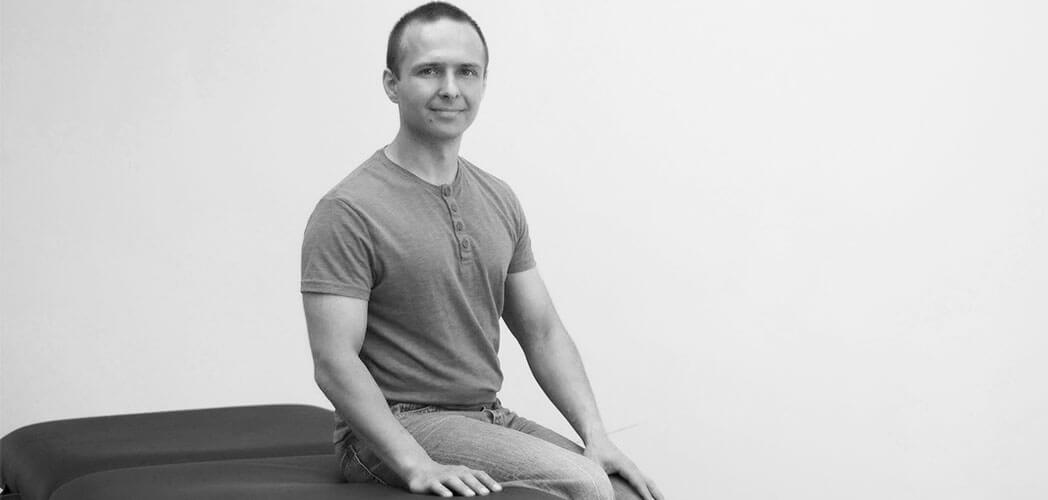
Rolfing in London
If you are looking for a qualified Rolfing practitioner in London, you’ve come to the right place. Or maybe you’ve heard the word Rolfing but you’re not sure what it is, or whether it can benefit you personally. Here you can find information to help you decide:
I practice Rolfing in two locations Token House (EC2R 7AS) & Baron St (N1 9ET), in the City of London. If you would like to discuss how I can help you, send me an email or hit the WhatsApp button below to start a chat, WhatsApp tends to yield a quicker reply.
Rolfing can be helpful for:
- Individuals of all ages with histories of pain and discomfort, including the ongoing effects of accidents, illnesses, surgery and trauma.
- People who are engaged in physically demanding jobs or exposed to repetitive motion or unilateral strain in the workplace.
- Anyone seeking relief from chronic postural misalignment or hoping to rediscover ease of movement.
- Athletes, gym users, dancers, actors, musicians and practitioners of Pilates, yoga or martial arts or anyone wishing to improve their body awareness and physical performance.
Monica Bastola
I cannot describe in words the gratitude I have for Jaro’s work. His knowledge and ability…
Robert O’Brien
Jaro is a magician! His understanding of the body is amazing and his ability to heal…
Ted Mayborn
I had the opportunity to undergo Jaro’s Rolfing treatment firsthand…
What is Rolfing
Discover Rolfing for Deep Tissue Realignment and Enhanced Functionality
Rolfing is a technique of deep tissue manipulation which releases tension and realigns the body to improve functioning and wellbeing. Although it is sometimes called “Rolfing massage”, it is very different from massage. Massage usually works with the muscles, to provide temporary relief when they have become overtired or strained through inefficient posture. Rolfing works on this network of tissues, or ‘fascia’, to release tension, realign the posture and balance the body.
Rolfers themselves take a holistic view of the body and the person. Rather than trying to “fix” symptoms in isolation, a qualified Rolfer will look to optimise the deep structures of the body to organise it with the primary force that acts upon it – gravity. When the body is aligned well, the causes for specific problems often resolve, or at least are easier to work with. The potential benefits of Rolfing include alleviating pain, reducing discomfort and creating a sense of bodily ease and wellbeing.
It takes its name from Dr Ida Rolf, the American biochemist who developed the system in the middle of the last century. She recognised that the body is a web-like system of networks of connective tissues rather than a collection of separate parts.
Rolfers themselves take a holistic view of the body and the person. Rather than trying to “fix” symptoms in isolation, a qualified Rolfer will look to optimise the deep structures of the body to organise it with the primary force that acts upon it – gravity. When the body is aligned well, the causes for specific problems often resolve, or at least are easier to work with.
History of Rolfing
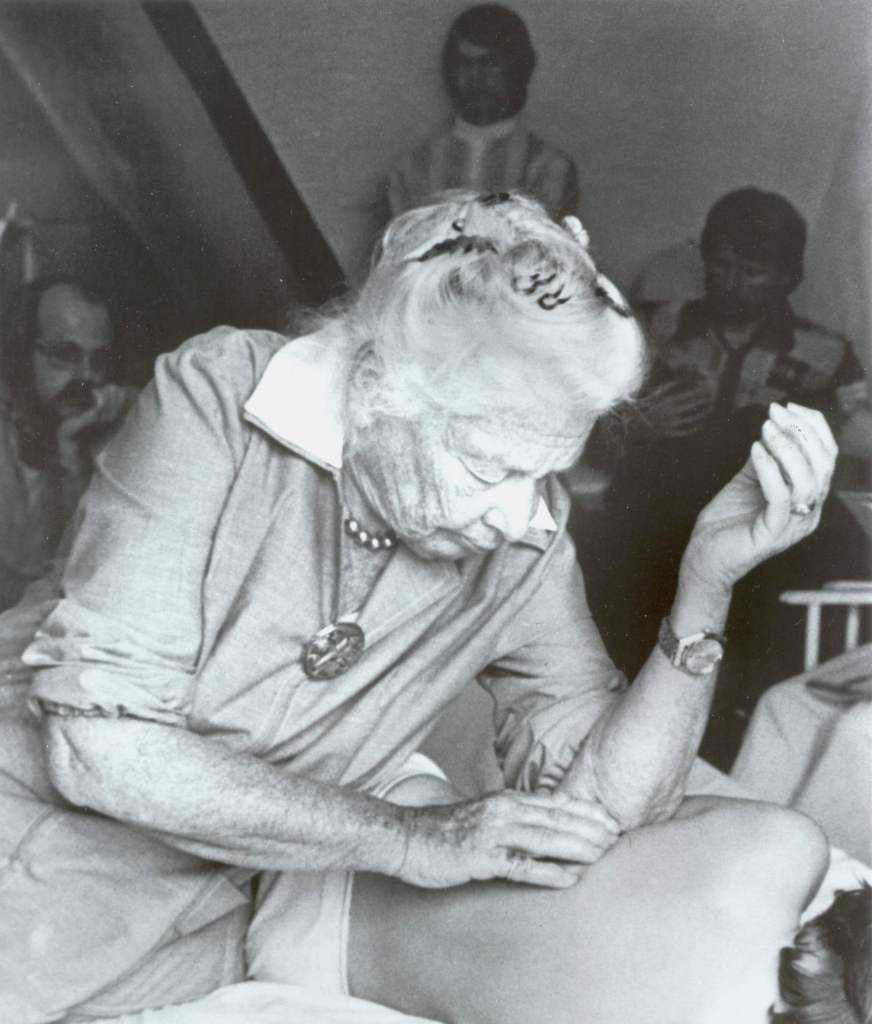
Dr. Ida Rolf’s Legacy: The Birth and Global Expansion of Rolfing Structural Integration
Dr Ida Rolf was the founder of Rolfing Structural Integration®
Born in the Bronx in 1896, Rolf went on to earn a PhD in Biochemistry from Columbia University’s College of Physicians and Surgeons and work as a research scientist in New York.
While studying in Switzerland during the following years, Dr Rolf became increasingly dissatisfied with the limitations of the medicine of her time. Determined to find solution to her and her family’s health problems, she explored many forms of alternative healing including osteopathy, chiropractic, the Alexander Technique and yoga.
Her experiences led her to conclude that the body functions best when the bony segments are in proper alignment, and that lasting improvement and an overall sense of wellbeing could be brought about by taking into account the effects of gravity on our structure.
She brought these insights together in the system of structural integration which is now known as Rolfing. Founded after her death in 1979, the Rolfing Institute of Structural Integration has shared her work across the world.
Today, there are over 2000 certified Rolfers and Rolf Movement® Practitioners worldwide.
The Benefits of Rolfing
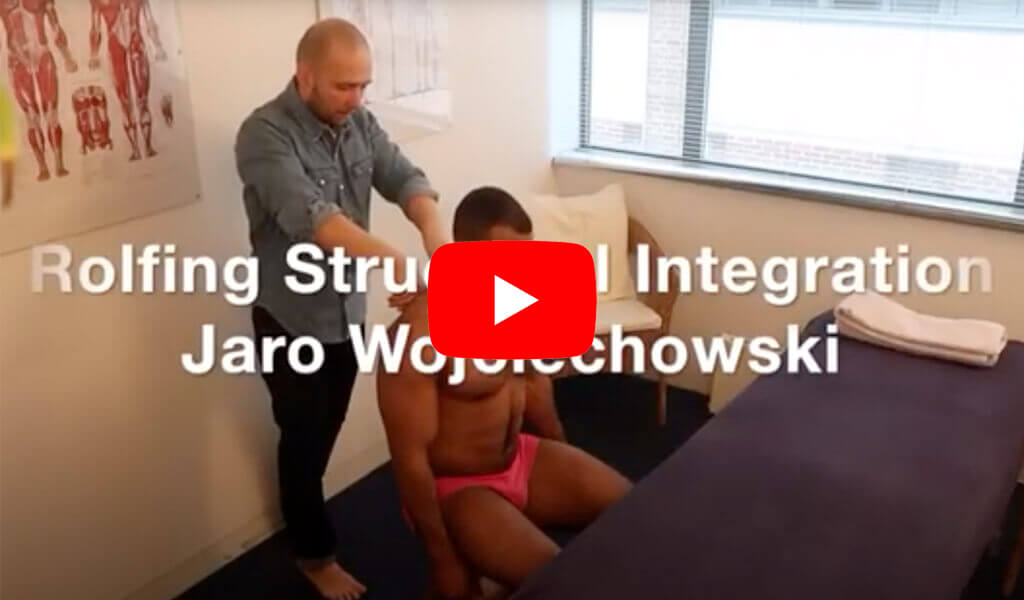
Here’s an example video of a Rolfing session. This video is showing me working with one of my clients, a natural bodybuilder. Click the link to read the full article about Bodybuilder rehabilitation, posture correction and fascia realignment.
Enhancing Your Body’s Potential – The Transformative Journey of Rolfing Structural Integration®
Rolfing can greatly improve your body’s alignment, posture and capacity for movement by releasing accumulated tensions and strains through a 10-session process called ‘the recipe’.
Each session begins with a body reading to see how you habitually stand, walk, sit and move in everyday or sport activities and how you breathe. Treatment is a blend of hands-on manipulation and movement education.
The Rolfing practitioner is a partner in the healing/learning process. Rather than imposing their own ideas on an unaware recipient, a good Rolfer will bring the needed changes into awareness by discussing what is going on.
After the session, they might prescribe certain exercises to be done, which could simply be to notice certain changes in your bodily experience, or to be aware in such-and-such a way when performing certain movement. For example, to feel how your sit-bones support you when sitting at your desk. The benefits from Rolfing can thus include a far greater sense of one’s own body, the way we move and hold ourselves.
Chronic pain can originate with a less than optimal organisation of tension in the fascia that surround and hold the muscles and organs of the body. This can be because of a protective reaction to an accident or injury. If this is the cause, it can be susceptible to resolution through Rolfing.
Those of us who have to stand or sit in one position for long periods in our jobs can be prone to Repetitive Strain Injuries (RSI), also known as Upper Limb Work-Related Disorders. These can be very difficult to diagnose, let alone treat using conventional methods. Rolfing is one way that can be very effective in treating these types of problems.
If you feel you have “poor posture”, then you have already taken the first step – identifying the problem! Simply trying to sit up straight, as we’ve been told to do all our lives, doesn’t seem to help. If the fascia get “stuck” in one position instead of being flexible as they should be, this can result in chronic postural misalignment. It takes a trained eye to see which layers of fascia need work.
Perhaps you simply want to rediscover ease of movement. Moving our bodies easily and painlessly is really our birthright, and there’s no reason why we should give it up just because we are getting older. Those who rely on their physical performance to do their job or for a hobby will also readily appreciate the gains in mobility and awareness that can be had with Rolfing.
The Rolfing Ten Series
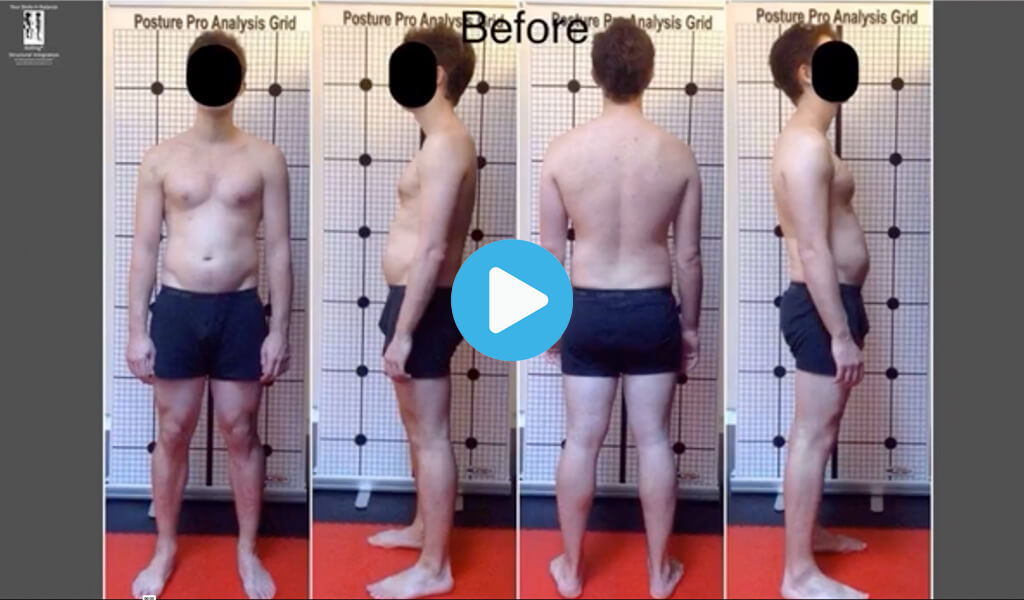
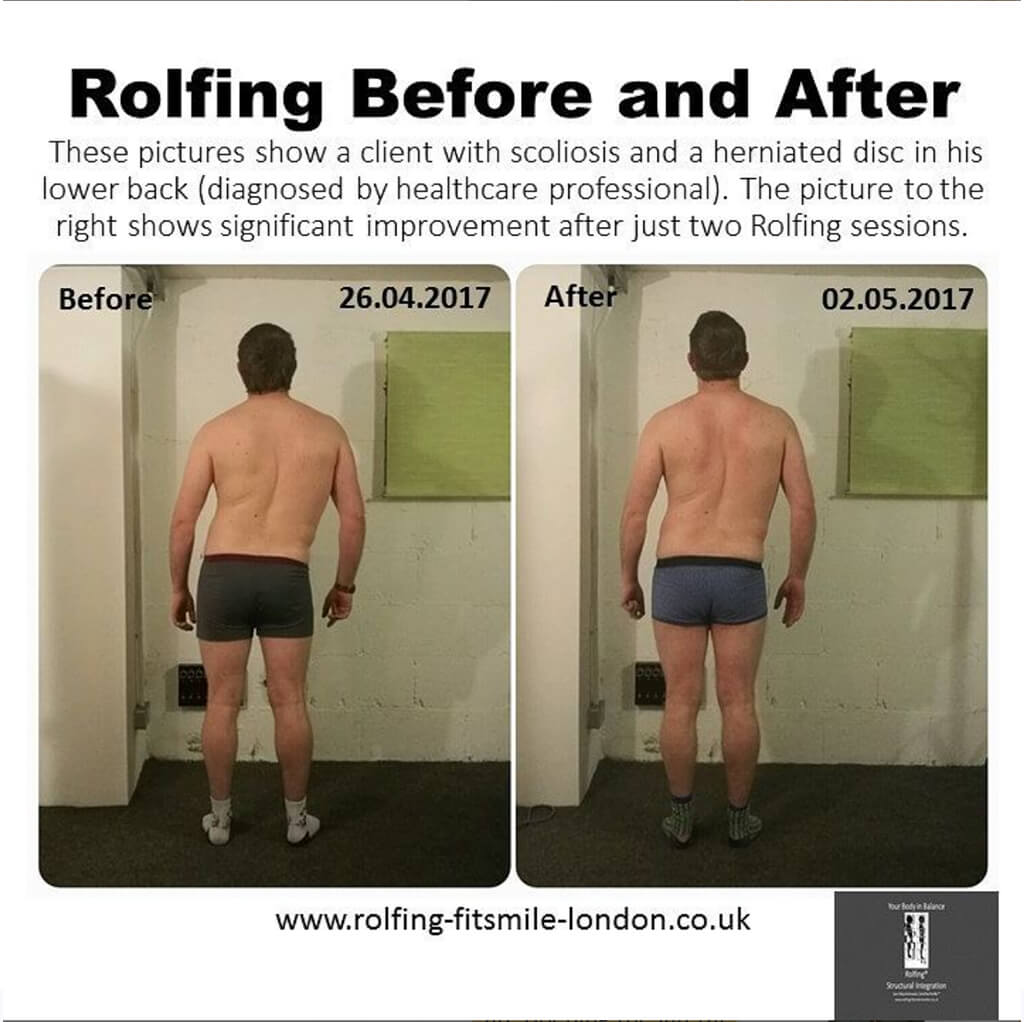
Rolfing 10 Series Before & After from Rolfing Fitsmile London
The ‘ten steps’ or ‘recipe’ is part of what makes Rolfing so different and effective.
Each hour-long session focuses on one aspect of the body and prepares it to move on to the next one. The ten steps gives practitioner and client a framework for covering all important areas of the body. After the ten steps, clients can continue to take Rolfing sessions on an ad-hoc basis to maintain healthy movement in the face of life’s pressures.
3) The third session works on the sides of the body to integrate the ribcage, waist and back.
7) The seventh session releases tensions in the shoulders, neck and skull to balance the head on the spine. By working on the mouth and nose, we also release tension in the face.
8) Session eight is devoted to work on the areas most resistant to integration with the whole body in either the upper body and arms or the lower body and legs.
9) Session nine continues the work of the previous session, helping to integrate the body and achieve its ideal posture and functioning.
10) The tenth session works on the whole body in an integrative way to bring together the learning and changes of the previous nine sessions.
Locations
L1: Token House, London, EC2R 7AS
L2: 23 Baron St, London, N1 9ET
WhatsApp: (44) 7840-138019
Email: rolfing.personal.training@gmail.com
 Rolfing Therapy